
An Authentic Historic Kitchen Where the Woodwork Steals the Show
Some kitchens impress with dramatic renovations and the latest design trends. Others are memorable precisely because they resist them. Today’s historic kitchen is full of the craftsmanship that gives an older home its soul. Decor is purposely kept to a minimum to let the woodwork shine. (All photos by Clay Banks.)
Letting the Original Woodwork Take Center Stage
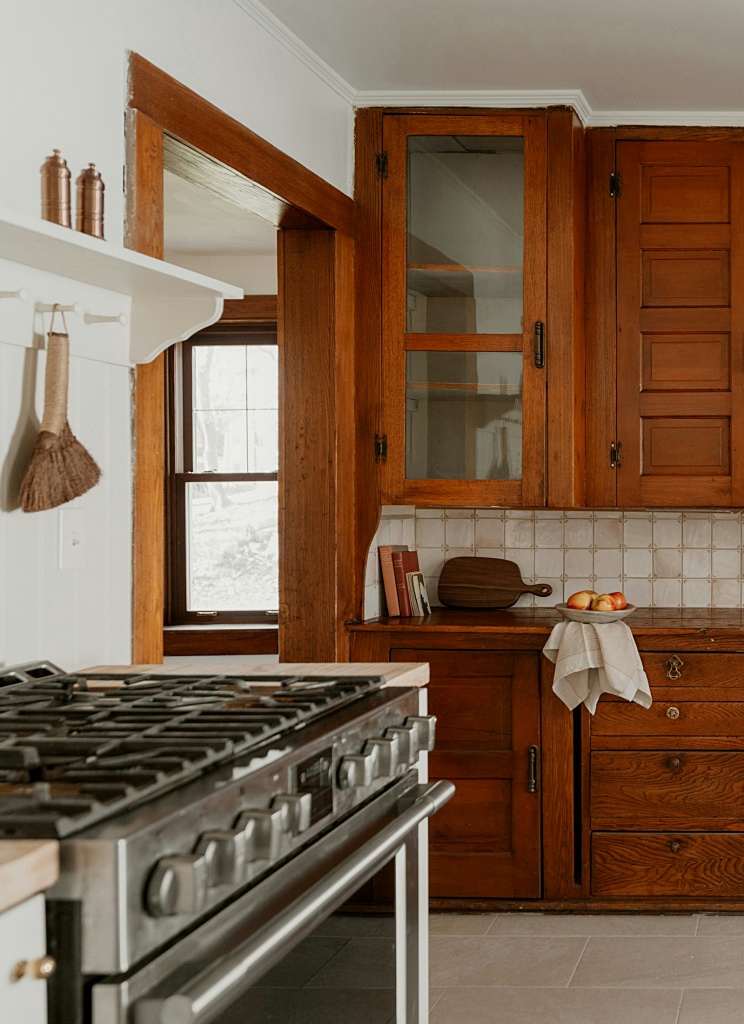
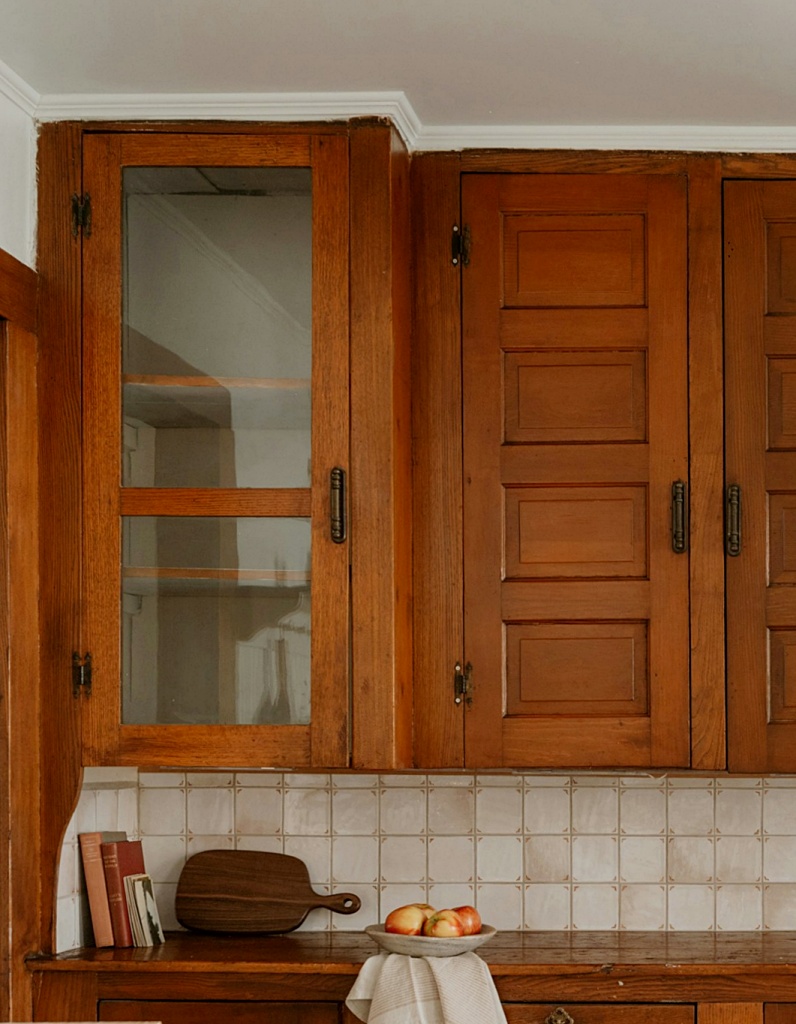
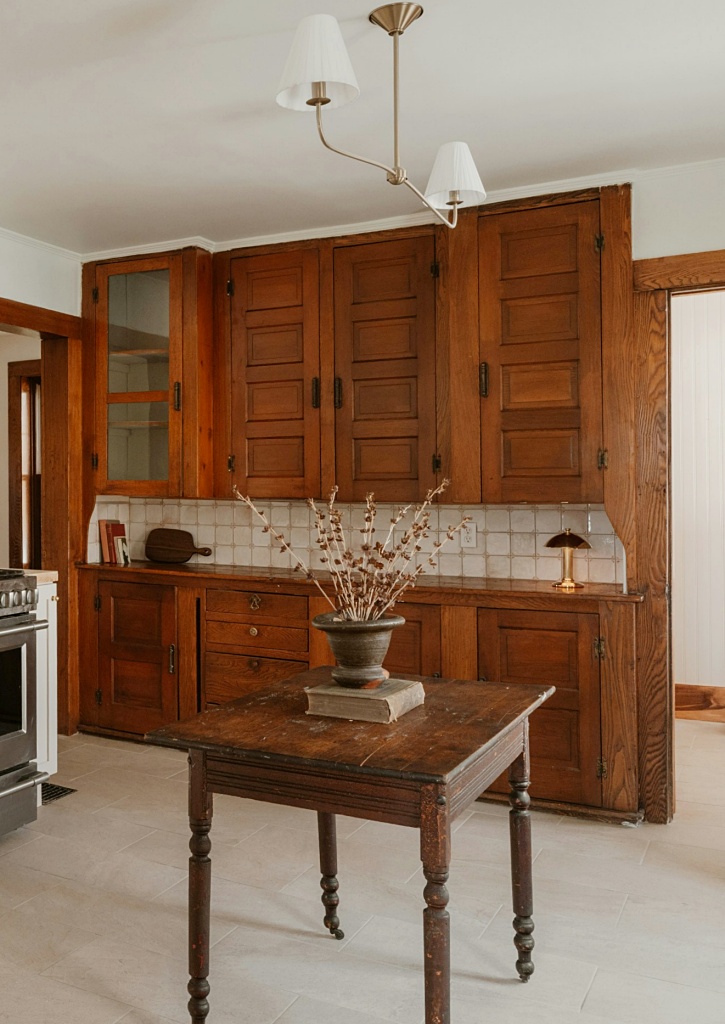
The most striking feature is undoubtedly the bank of dark wood cabinetry. Its paneled doors, aged finish, traditional hardware, and beautiful grain provide the richness that a newly installed kitchen would have difficulty replicating.
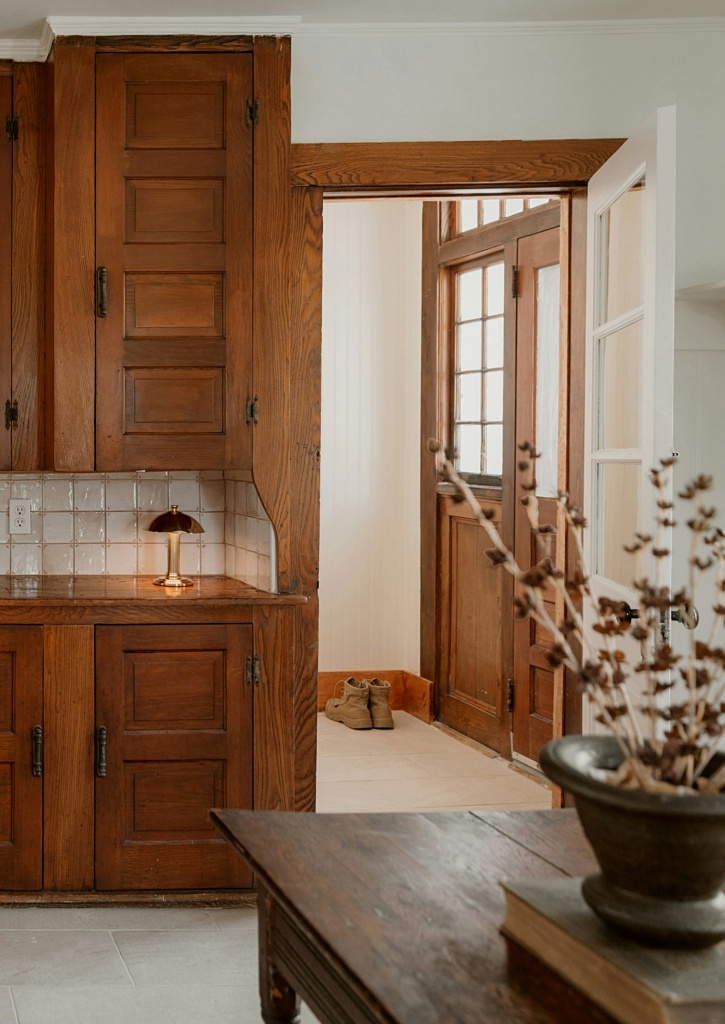
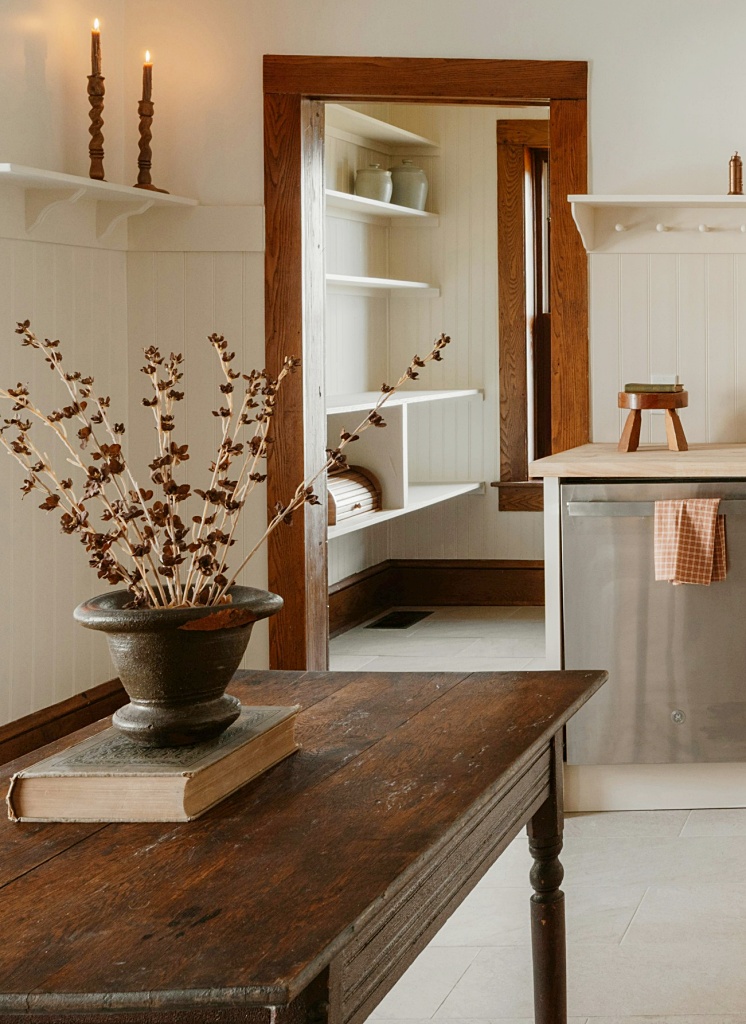
The surrounding woodwork is equally important. Wide door casings, window trim, and the handsome wood doors beyond the kitchen establish the home’s historic character. Instead of painting everything white in an effort to modernize the space, the wood has been allowed to remain a prominent part of the room.
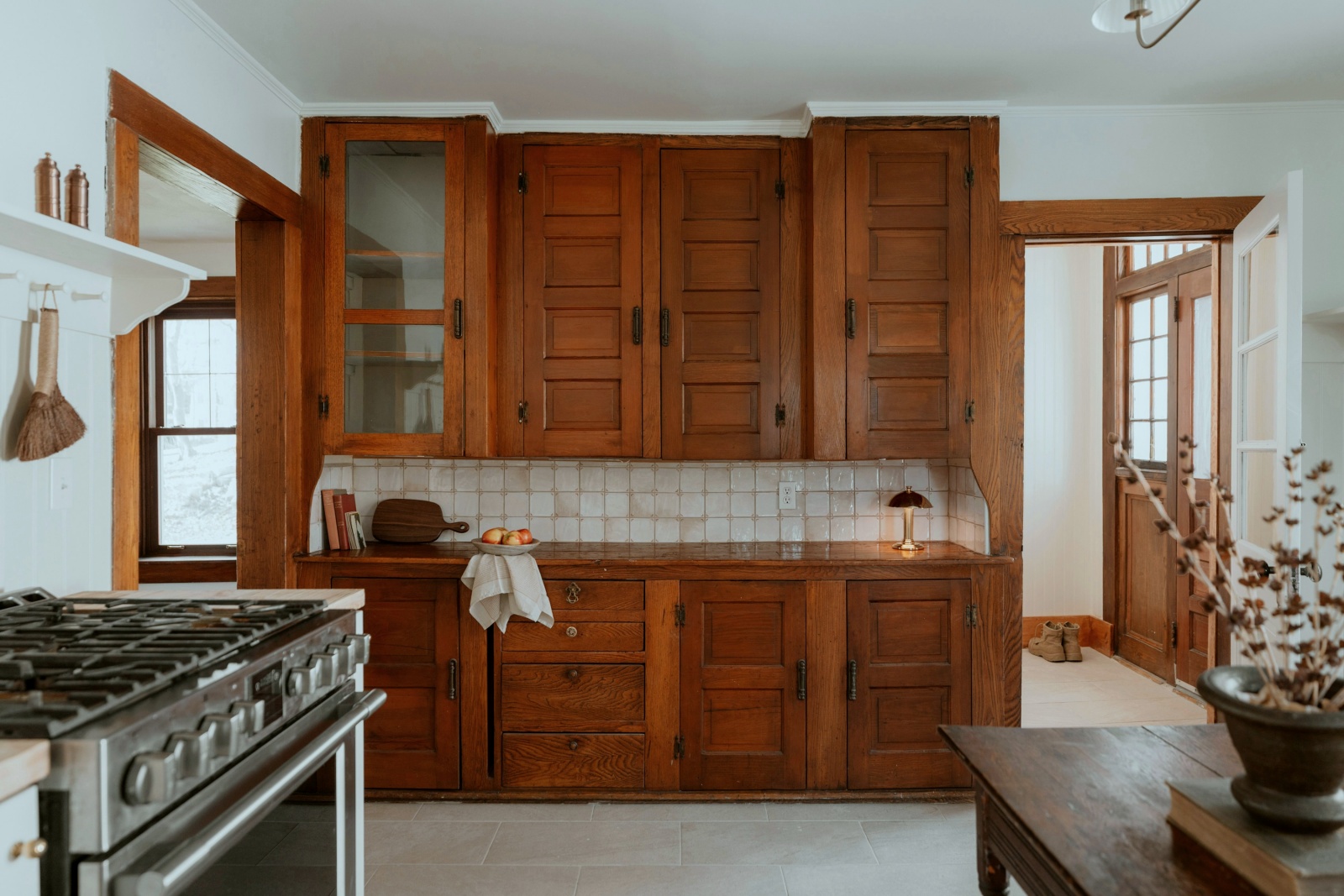
There is something wonderfully imperfect about old wood, too. Slight variations in color and finish often times aren’t flaws to be corrected. They’re part of the story.
A Quiet Contrast of Old and New
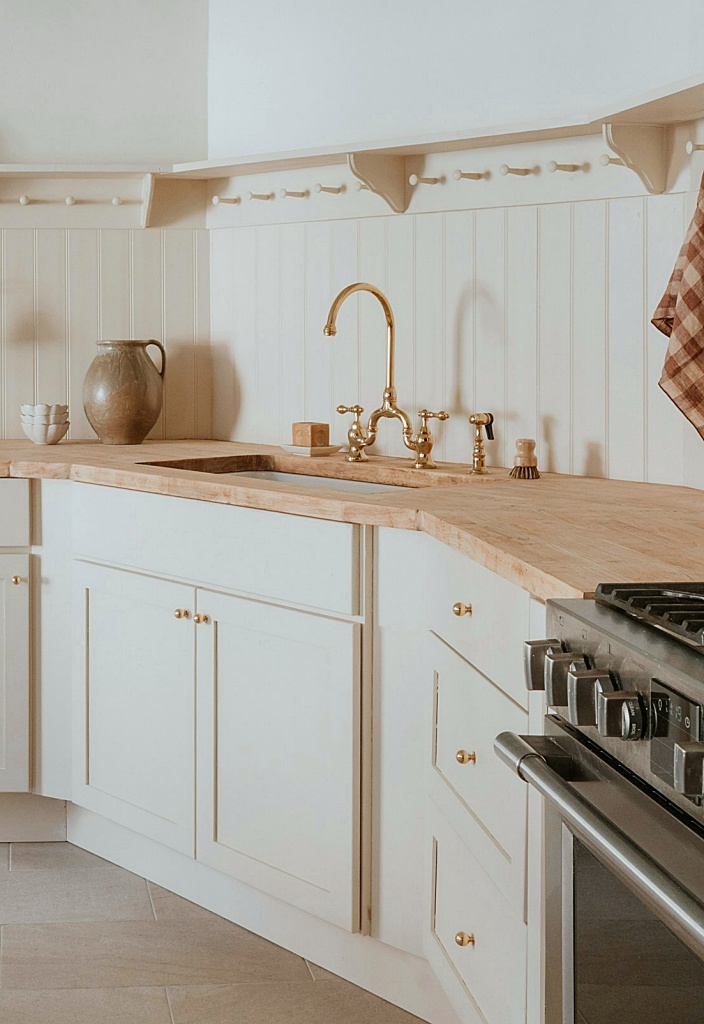
On the opposite side of the room, simple cream-colored cabinetry provides a lighter counterpoint to all that rich wood.
The cabinetry is intentionally understated. Shaker-style doors, small brass knobs, and pale wood countertops feel appropriate for an older home without attempting to imitate the original cabinetry.
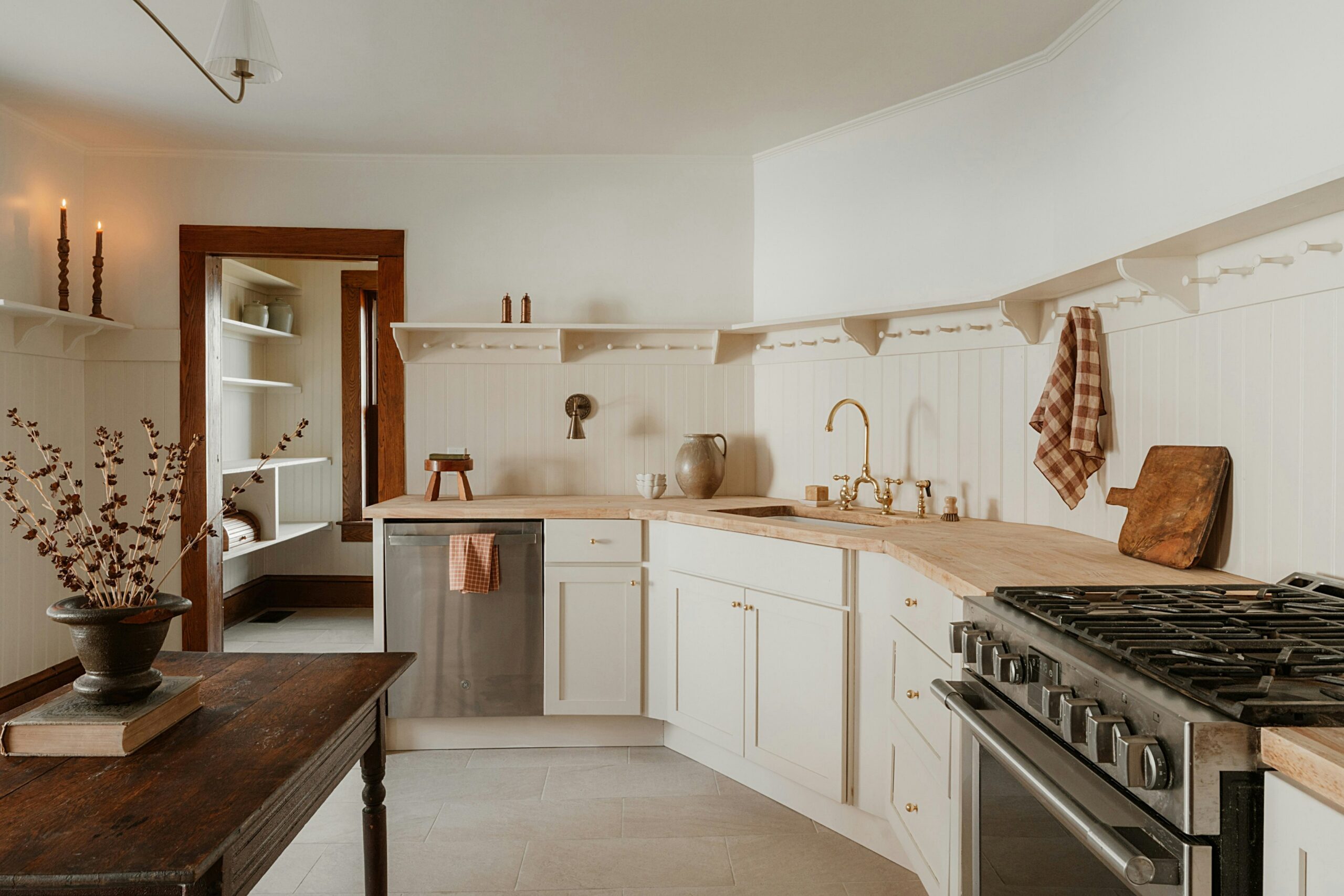
The creamy white beadboard is another lovely choice in the historic kitchen. It adds subtle texture while maintaining the simple, utilitarian quality that suits the architecture.
Even the open shelf running around the room serves a purpose without demanding attention. A row of small pegs adds an old-fashioned detail while providing a convenient spot for hanging towels and kitchen tools. I imagine most of you, me included, would prefer white ironstone, glass jars, or even cookbooks on the shelf instead of left barren.
Simple Materials Keep the Historic Kitchen Authentic
One of my favorite aspects of this kitchen is its restraint. There aren’t multiple competing countertop materials, an elaborate backsplash, oversized pendant lights, or a huge modern island. Instead, the palette is remarkably simple with wood, warm white, stone, brass, and stainless steel.
The pale wood countertops are especially pretty against the white cabinetry. Their natural variation prevents the lighter side of the kitchen from feeling stark, while the warm finish creates a visual connection to the original cabinetry across the room.
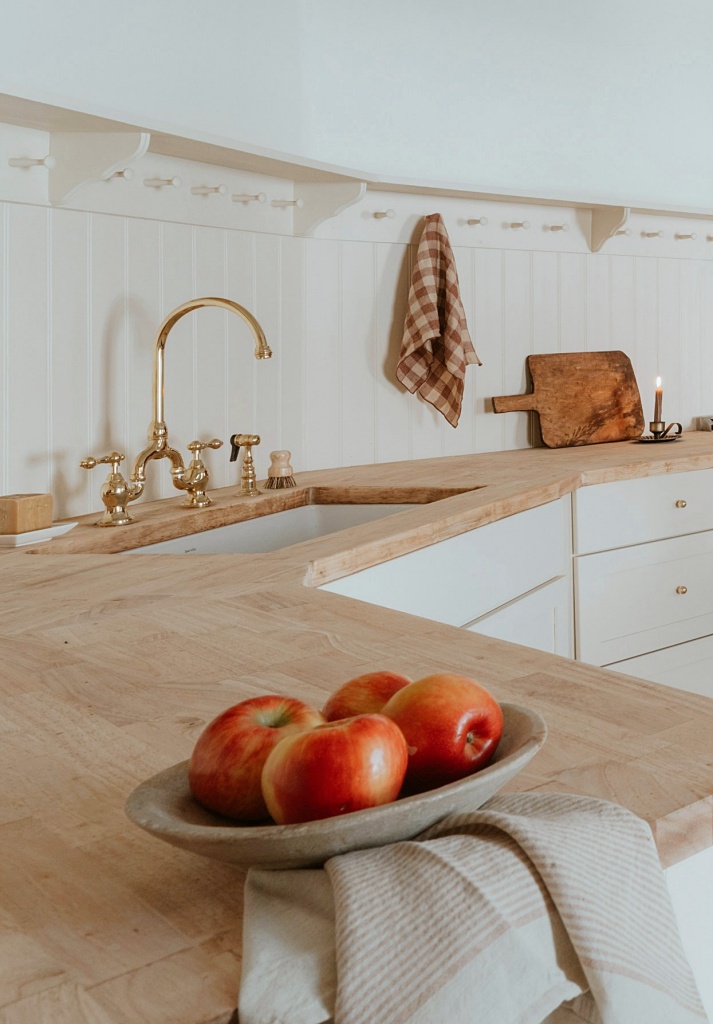
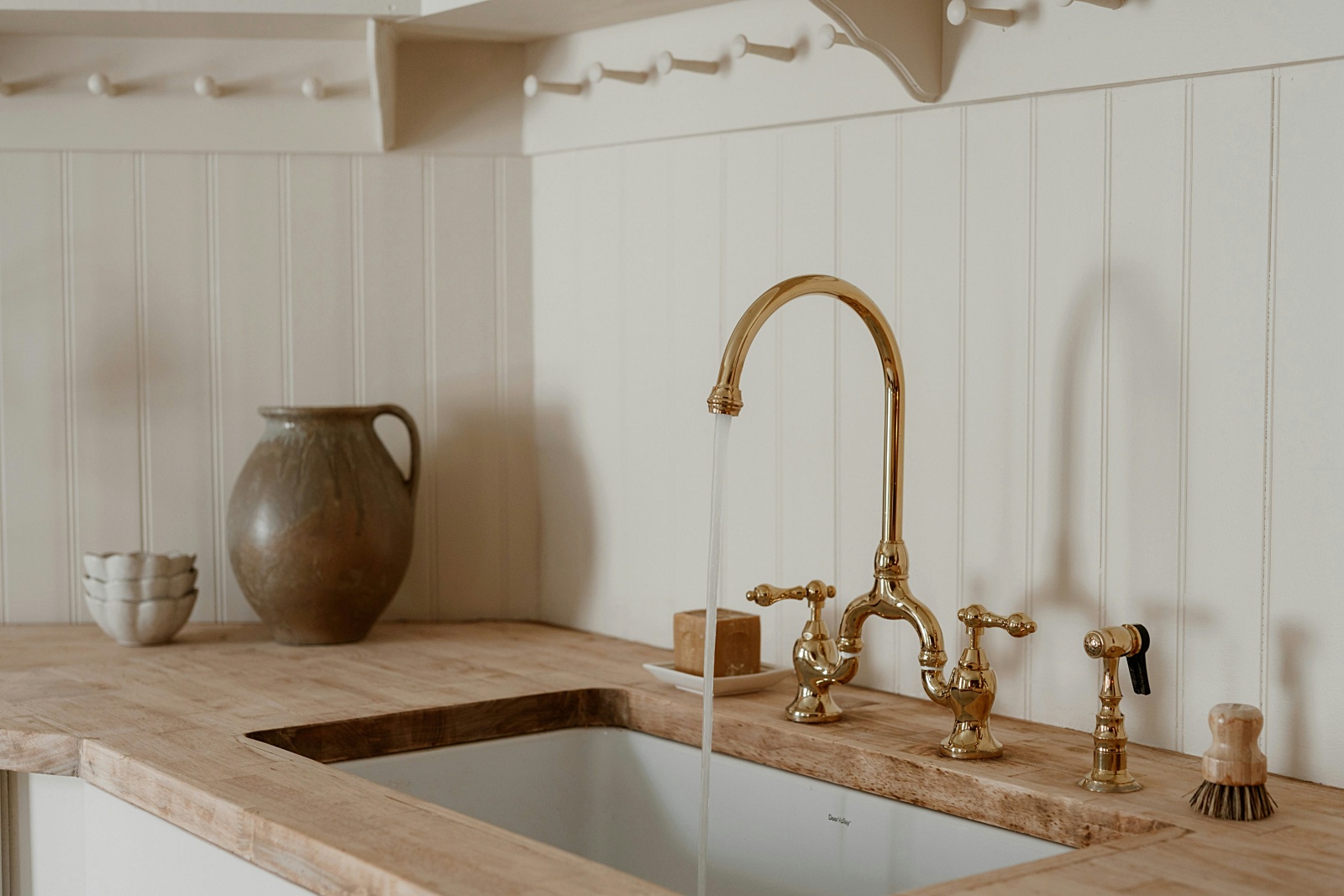
A traditional polished brass faucet adds just enough shine. Its classic shape feels perfectly at home here and turns an everyday necessity into one of the prettiest details in the room. I’d love to find a faucet like this one for my own kitchen.
Minimal Decorating Makes the Details More Noticeable
This historic kitchen is also a wonderful example of how not decorating every available surface can actually make a room feel more interesting.
There are no large collections filling the shelves and no counters crowded with accessories. Instead, a few carefully chosen objects like a pottery pitcher, wooden cutting board, small stack of bowls, books, candles, and a simple arrangement of dried branches add warmth without competing with the architecture. Even a bowl of apples and casually draped kitchen towel provide enough color.
An Antique Table Instead of a Kitchen Island
The old wooden table in the center of the room might be my favorite choice of all. In many renovations, this spot would automatically be filled with a built-in island. But the antique table feels far more appropriate to the scale and age of the house.
Its worn surface and beautifully turned legs introduce another layer of history while providing useful workspace. It’s a reminder that a kitchen doesn’t necessarily need a massive island to be functional or beautiful.
Modern Conveniences Without Losing the Past
Of course, preserving an old kitchen doesn’t mean living without modern conveniences. A stainless-steel range and dishwasher have been incorporated into the room, but neither becomes the focal point.
The appliances support the way the historic kitchen functions today while the architecture continues to tell the story of the house. It’s a thoughtful balance between preservation and everyday living.
Why This Minimalist Historic Kitchen Works
What makes this kitchen so appealing isn’t any one design element. It’s the restraint behind all of them. They allowed old and new elements to coexist. Dark historic cabinetry sits comfortably beside simple painted cabinets. Antique furniture shares the room with stainless steel appliances. Brass fixtures mingle with worn wood and humble beadboard.
And because the decorating is so minimal, none of those beautiful architectural details gets lost. I hope you enjoyed today’s historic kitchen tour.


I LOVE the old cabinetry, so gorgeous. I also adore the tile backsplash, can’t tell if that is antique or not. I’m thinking its new, made to look old. On the new side of the kitchen, rather than the white, I’d have put in olive green painted cabinets with matching style and hardware to the older. And a butcher block countertop stained to match the wood as well. And if that backsplash is available, use that too!
Thanks for sharing, loved seeing old cabinets kept and used instead of tearing everything out!
Amen! This kitchen is just great, and your take on it so well stated!
Thanks for sharing, Jennifer!
I think I would have opted for cherry or other darker wood for the counter tops…I love wood countertops….to carry the dark cabinetry hue across this beautiful kitchen, to connect the look. The light butcher block counters seem too modern and changes the feel of the kitchen, to two different kitchen looks, one modern Scandinavian and the other old . But , I just love old wood.
I wish I had cabinets like these, they are beautiful and truly enjoyed this kitchen. I have never seen kitchen doors like these.