
How to Improve the View into Rooms: Decorating with Sightlines
The next time you walk through your front door, pause for a second. Where does your eye go first? Maybe it lands on a sunny kitchen window at the end of the hall, or a favorite painting in the living room. That first glimpse is what decorating with sightlines is all about. Once you start looking at your home from one room to the next, you might find that a small change creates a better view.
Today is all about creating a beautiful flow of home. It can be achieved through use of color, patterns, or even furniture placement. When you’re in the kitchen, is the view into your dining room appealing? Is furniture placed to allow your eye to wander from one space to the next? See how the following examples achieve great views, no matter where you might be sitting or standing.
1. Give the Front Hall a View Worth Following
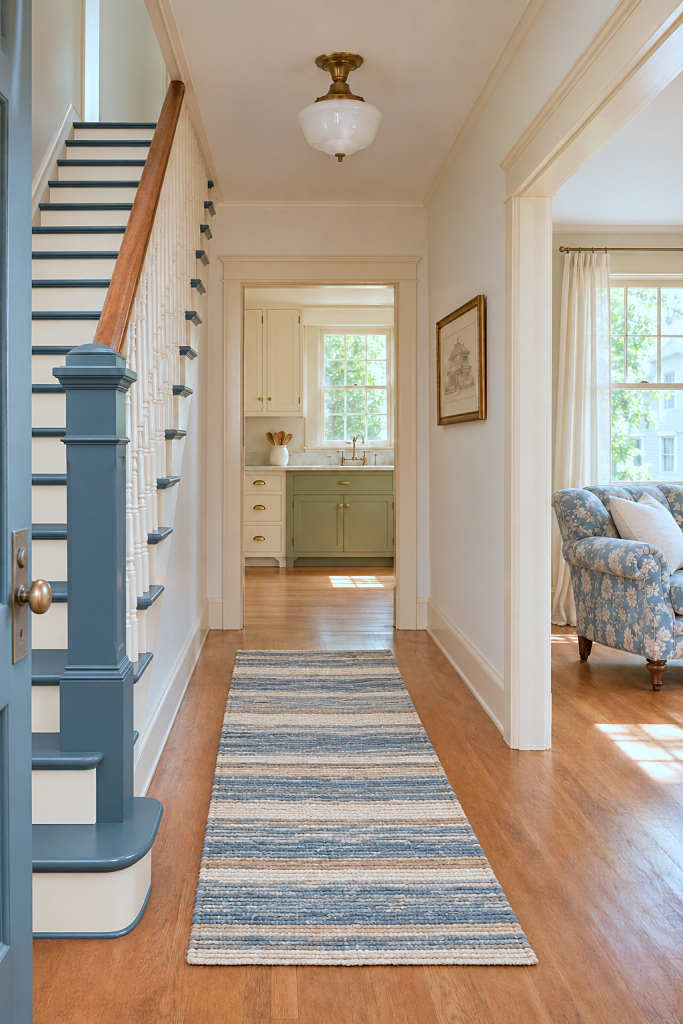
From the front door, you can see the staircase on the left, a bit of the living room on the right, and the kitchen window straight ahead. The striped rag runner leads you down the hall, while the slate-blue stair treads and floral sofa give you something to notice along the way. I like that you get a sense of the house before you’ve taken more than a step or two inside.
Try it at home. Stand at your front door and look straight ahead. If you can see a window at the far end, enhance it with a pretty curtain or shade. Set a table beneath it with a bouquet of flowers on top. A runner can emphasize the view while adding a little pattern underfoot, it also invites your eye to travel down the hallway.
2. Let an Archway Frame a Favorite Piece
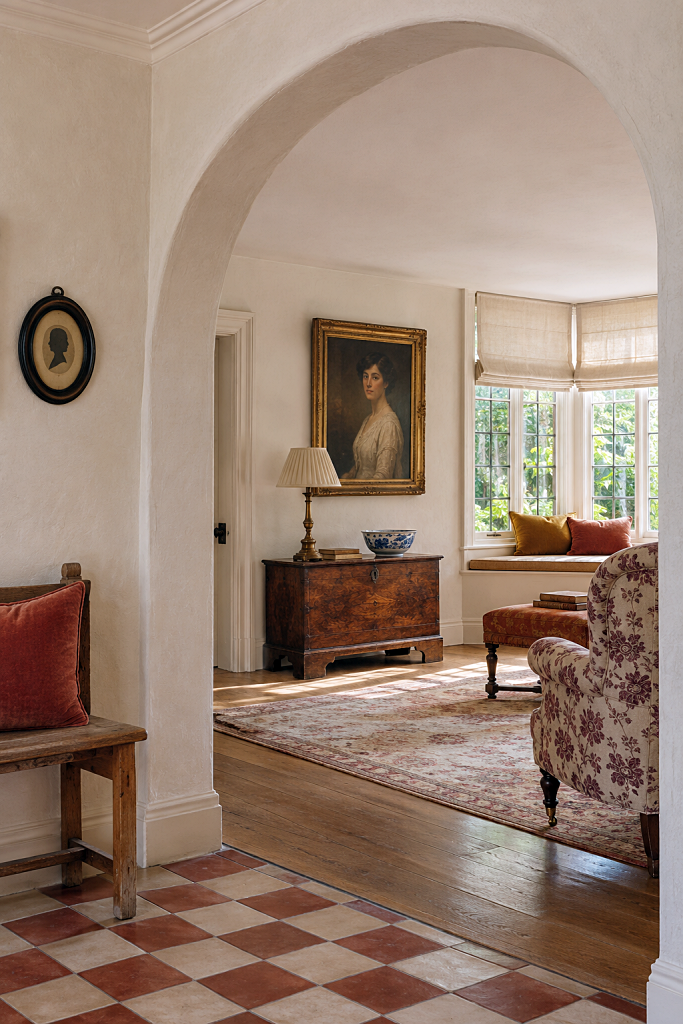
An archway into a living room frames an antique portrait and walnut chest so nicely that you might miss the pretty bay window on your first glance. Then you notice the rust-colored pillow on the window seat, echoing the one on the hall bench. The checkerboard tile gives way to wood flooring, so each room still has its own character.
Try it at home. When decorating with sightlines, choose a favorite piece of art and see where it looks best from the adjoining room. A spot slightly off-center can work beautifully if it leaves room for a second detail, such as a sunny window or a patterned chair.
3. Carry a Paint Color Through the Doorway
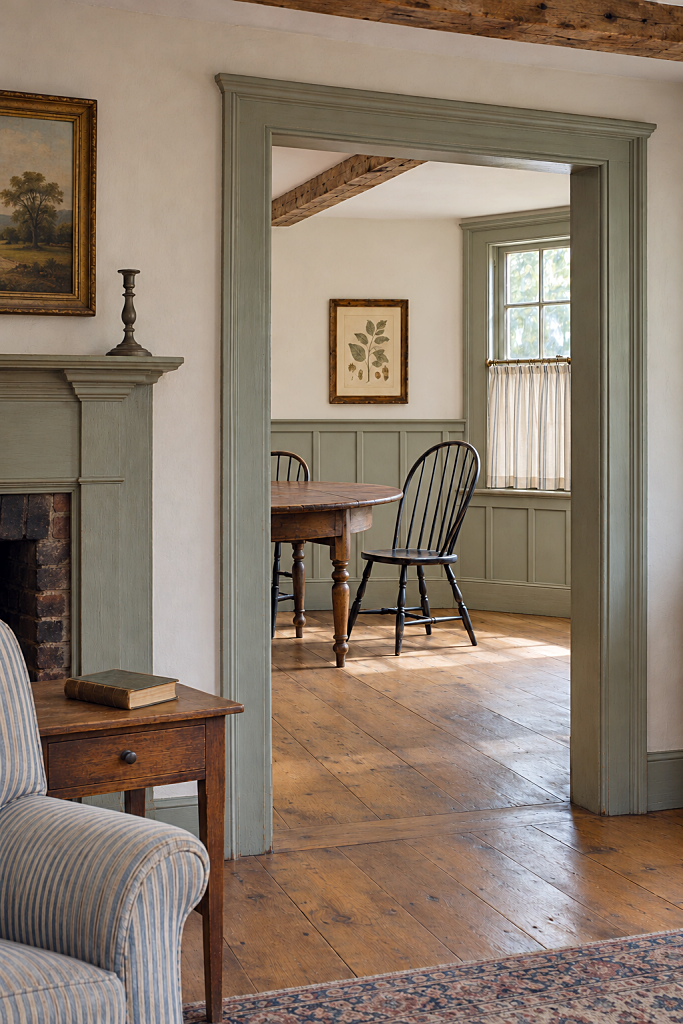
The sage-green mantel in this living room gives you a hint of what’s ahead. The color continues around the doorway and onto the dining room’s board and batten and window trim. I especially like the little repeat of blue in the striped café curtain and the chair in the foreground. It’s the sort of detail you might only notice after looking at the room twice.
Try it at home. Pick one color that already works in the first room and repeat it on a single surface or textile in the next. A painted door casing, a café curtain, or even a seat cushion can make the connection.
4. Make the Most of a Kitchen Window
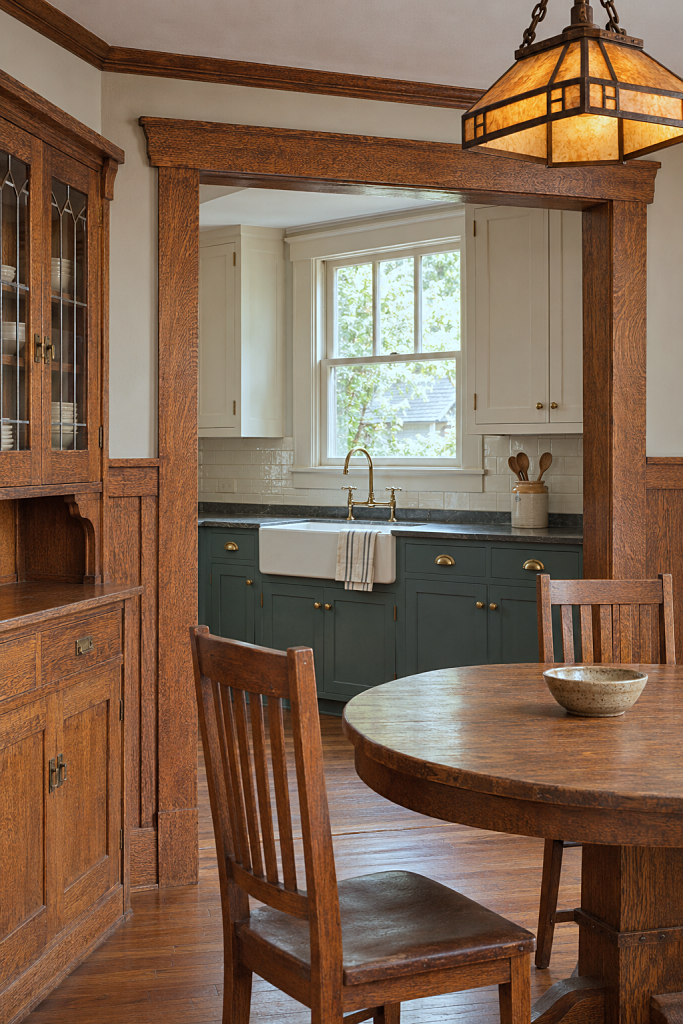
In this Craftsman bungalow, the substantial oak casing between the dining room and kitchen frames the apron-front sink and the window above it. The golden wood, leaded-glass built-in, and amber pendant make the dining room feel warm, while the light beyond draws you into the kitchen. A striped towel and a crock of wooden spoons are all the sink area needs from this angle.
Try it at home. Look toward the sink from your dining chair. If the view feels busy, try grouping the things you use every day on one side of the counter. The open space beside them lets the window and the woodwork stand out.
5. Repeat a Color from the Kitchen to the Family Room
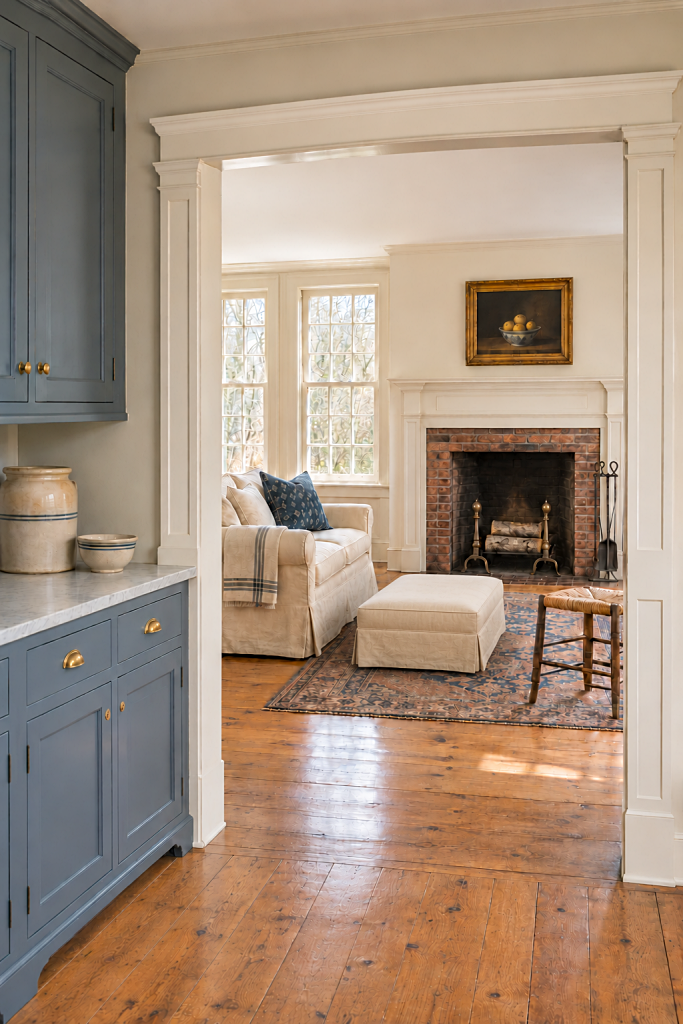
From the Colonial kitchen, the first thing I notice is the brick fireplace in the family room and the small still life above it. Then I see how the blue kitchen cabinetry picks up the blue in the family room rug and sofa pillow. The low cream ottoman blends with the sofa and leaves the hearth in view.
Try it at home. For an easy start to decorating with sightlines, borrow a color from something that’s already visible through the doorway. If the kitchen cabinets are blue, try a pillow or throw in a related shade in the family room. Then step back and judge the colors from the kitchen, where you’ll actually see them together. Likewise, step in into the family room and check the view into the kitchen.
6. Give a Quiet Hallway a Little Surprise
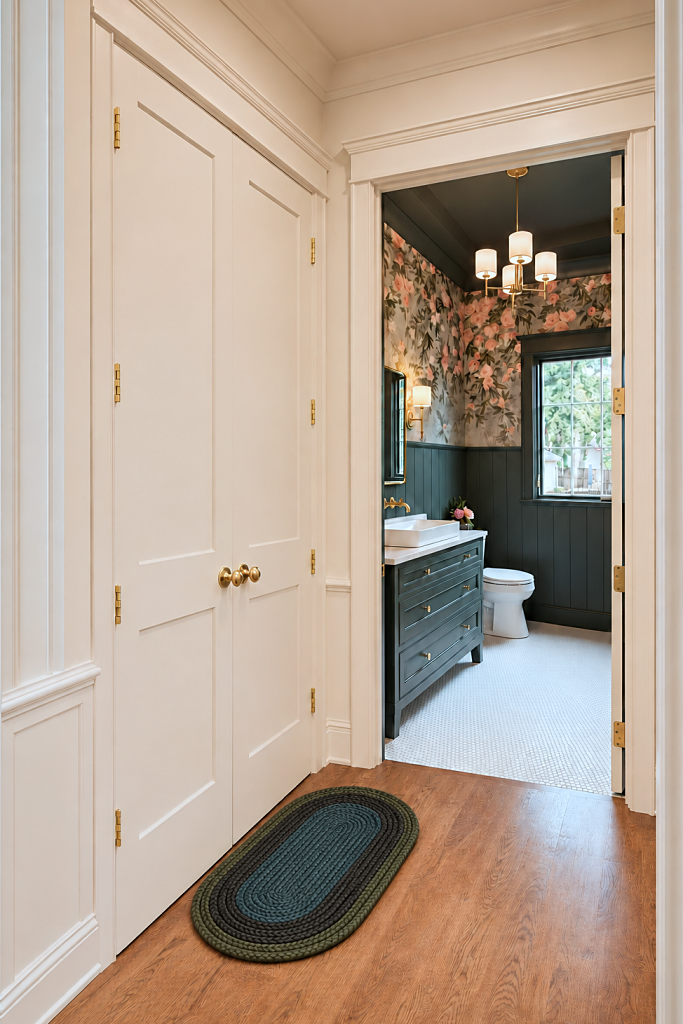
The cream closet doors and oak floor make this hallway feel quiet. Then the powder room door opens, and suddenly there’s a floral wallpaper, dark blue-green paneling, and a brass chandelier. I love how much personality you can see in just that sliver of a small room.
Try it at home. Before you commit to a bold wallpaper, hold the sample on the wall you can see from the hall. Back up a few steps and take another look. That’s where you’ll get a feel for how the pattern and color work with the rest of the house.
7. Make the Most of a Peek into a Bedroom
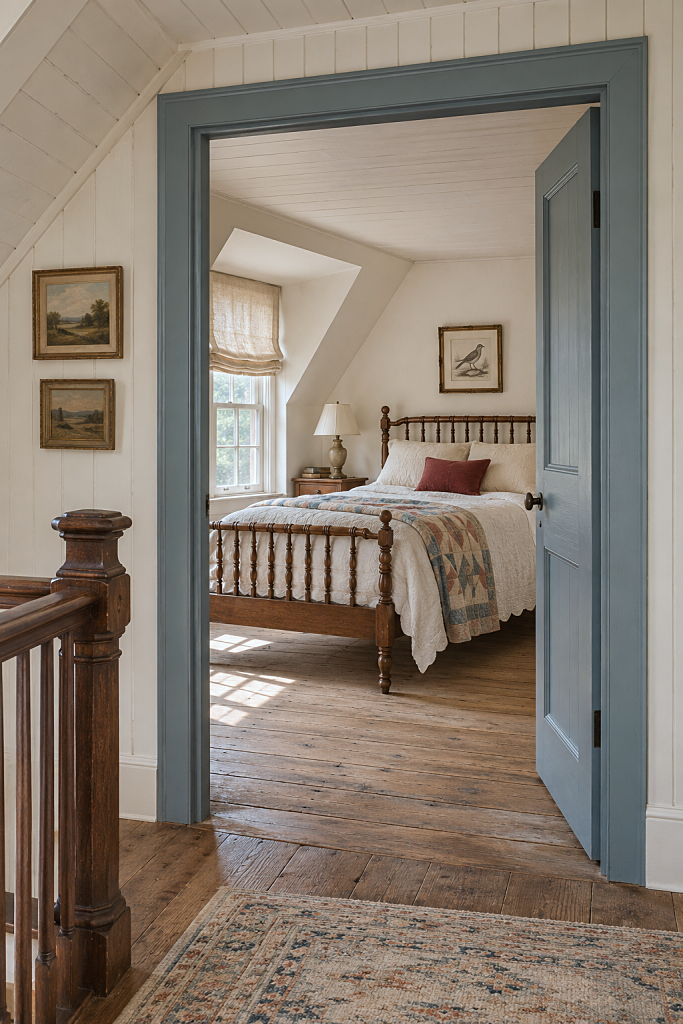
From the landing, the slate-blue doorway frames a spindle bed tucked under the eaves. The faded blue in the quilt picks up the door color, and the little bird print over the headboard is just where your eye naturally goes. Even with the door only partly open, you can see what gives the room its charm.
Try it at home. Check the view with the bedroom door at the angle you usually leave it. If all you see is the edge of a dresser, try shifting a piece of art or folding a favorite quilt where it will catch your eye as you pass.
8. Give the Bedroom and Bath a Color in Common
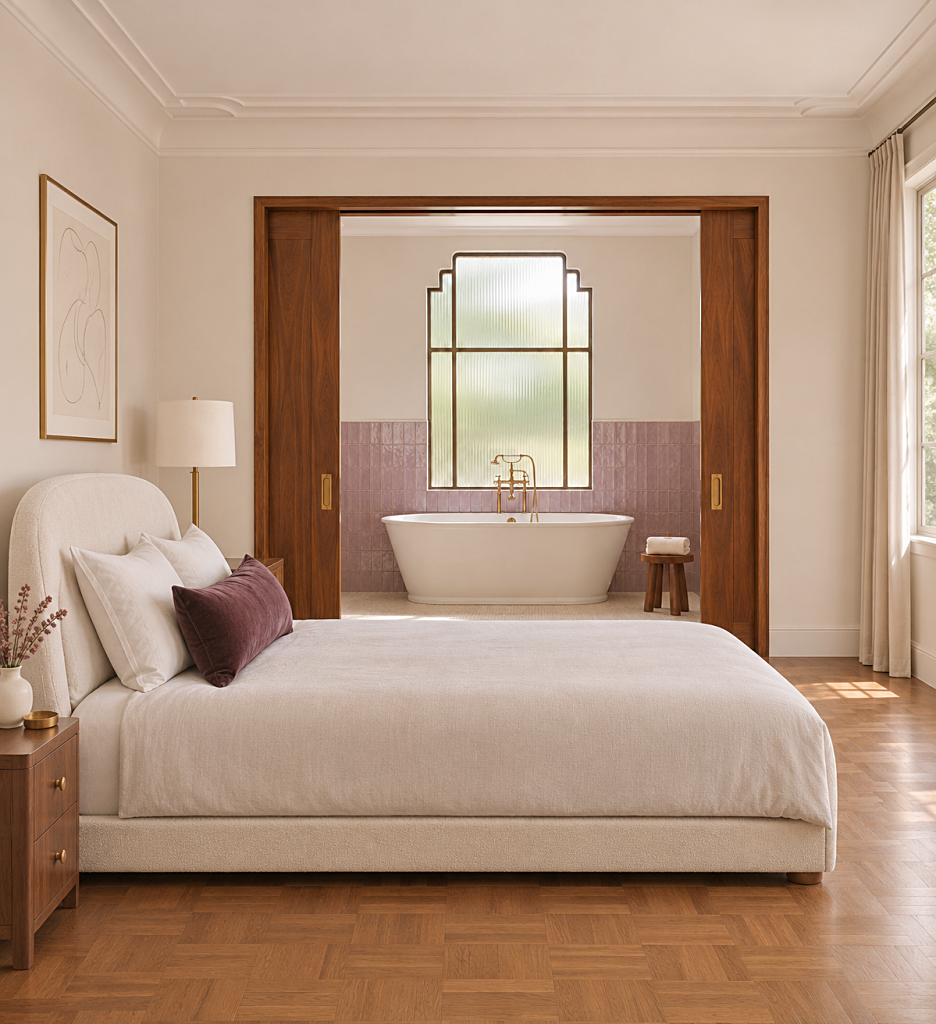
In this European style master bedroom, open walnut pocket doors frame a freestanding tub beneath a stepped Art Deco window. The plum velvet pillow on the bed echoes the dusty mauve tile in the bath. Whether the pocket doors are closed or open, the space is always attractive.
Try it at home. Pull a shade from your primary bathroom tile, wallpaper, or vanity and bring it into the bedroom with a pillow or throw. A slightly deeper or softer version of the color can be enough to make both rooms feel connected.
The fun of decorating with sightlines is that you can start with what you already have. Stand where you usually enter a room, then try moving a lamp, shifting a chair, or bringing a favorite painting into view. Which doorway in your home would you start with?


